Carrying the Cure: How Huffaz Can Turn Memorized Surahs Into Spiritual Remedies for Modern American Life
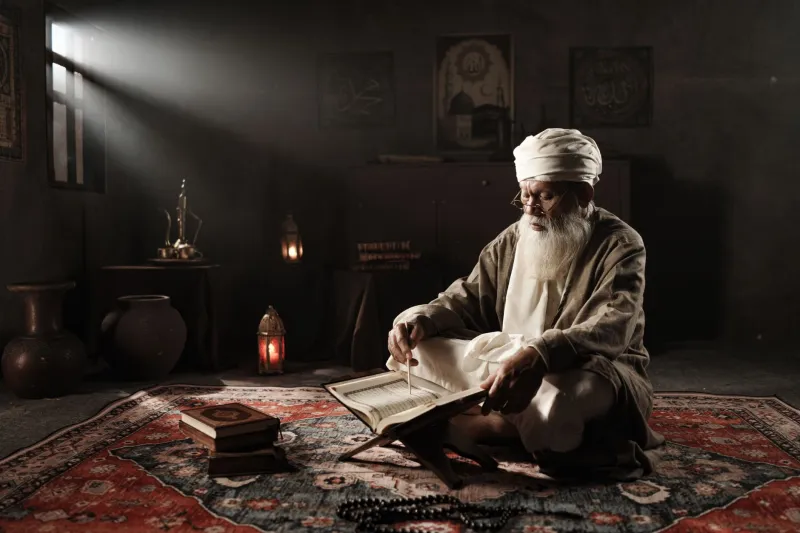
Allah describes the Quran in Surah Al-Isra as "a healing for what is in the breasts" (17:82). That description was not metaphorical decoration. It was a precise declaration about function. The Quran heals. And for the hafiz who has committed its verses to memory, that pharmacy is not on a shelf somewhere—it is carried within the chest, available at every moment of need.
Yet many huffaz in America treat their memorization primarily as an achievement: a completed journey, a credential, a source of pride at Friday prayers. The deeper invitation—to draw upon specific surahs as targeted medicine for specific conditions of the soul—often goes unexplored. This article is an attempt to begin that exploration in earnest.
The Premise: Surahs as Targeted Interventions
Islamic scholarship has long recognized that different portions of the Quran address different dimensions of the human experience. The companions of the Prophet ﷺ did not merely recite; they sought out particular passages when particular conditions arose. Ibn al-Qayyim devoted entire chapters of Zad al-Ma'ad to Quranic prescriptions for spiritual ailments. What was intuitive to early Muslims has, for many contemporary American Muslims, become disconnected from daily practice.
The goal here is reconnection—mapping the lived crises of American Muslim life onto the surahs that speak most directly to them, and encouraging huffaz to memorize and meditate on these surahs with that specific healing intention in mind.
Anxiety and Chronic Worry: Surah Ad-Duha and Surah Al-Inshirah
Clinical anxiety is among the most commonly reported mental health concerns in the United States, and American Muslims are not exempt. The pressure of navigating a society that rarely mirrors one's values, combined with professional competition and family obligations, creates a particular strain that can feel relentless.
Surah Ad-Duha (93) was revealed to the Prophet ﷺ during a period of apparent divine silence—a time when he feared he had been abandoned. Its thirteen verses are a masterclass in reframing despair. "Your Lord has not abandoned you, nor has He become indifferent" (93:3). The surah does not deny difficulty; it repositions it within a larger arc of divine care. For a hafiz reciting this in the early morning, it functions as a recalibration—a reminder that silence is not absence.
Surah Al-Inshirah (94) follows as its companion, announcing the relief that follows hardship not once but twice within eight verses. Scholars note that the repetition is not accidental; it is rhetorical medicine. The hafiz who carries these two surahs and returns to them during seasons of anxiety possesses something no prescription can replicate: a direct address from their Creator, spoken specifically into the architecture of their fear.
Identity Confusion: Surah Al-Hujurat and Surah Al-Kafirun
American Muslims—particularly those who are second-generation or who converted—frequently wrestle with a layered identity crisis. Pressure to assimilate professionally, socially, and culturally can erode a sense of who one actually is before Allah. The question "Where do I belong?" takes on a spiritual weight that secular frameworks cannot adequately address.
Surah Al-Hujurat (49) speaks directly to the question of identity and community. It dismantles tribal and racial hierarchy, insisting that the only meaningful distinction before Allah is taqwa—conscious awareness of Him. For the American Muslim who feels caught between ethnic heritage, Western culture, and Islamic identity, this surah offers a clarifying framework: your worth is not located in any of those external categories.
Surah Al-Kafirun (109), meanwhile, is a surah of dignified distinction. "For you is your religion, and for me is my religion" (109:6). It does not express hostility; it expresses clarity. The hafiz who memorizes and reflects on this surah builds what might be called a spiritual backbone—the ability to occupy a distinct identity without aggression and without apology.
Career Pressure and Materialism: Surah At-Takathur and Surah Al-Qasas
The American professional environment is saturated with a particular gospel: accumulate more, achieve more, become more. Even well-intentioned Muslims can find themselves measuring their worth by income, title, or the neighborhood they live in. This is not a new problem—the Quran addressed it fourteen centuries ago.
Surah At-Takathur (102) opens with devastating directness: "Competition for worldly increase diverts you until you visit the graves" (102:1-2). Eight verses. No elaboration needed. For a hafiz who recites this surah after a long week of professional striving, it functions as a reset—not a condemnation of ambition, but a reorientation of its ultimate purpose.
Surah Al-Qasas (28) offers a more narrative remedy through the story of Qarun, a man of immense wealth who attributed his fortune entirely to his own intelligence and effort. His story ends in the earth swallowing him whole. But the surah does not end in despair—it closes with one of the Quran's most beloved verses on the balance between this world and the next: "Seek, through that which Allah has given you, the home of the Hereafter; and do not forget your share of this world" (28:77). That balance is precisely what many American Muslim professionals are searching for.
Isolation and Spiritual Loneliness: Surah Al-Kahf and Surah Maryam
Isolation is epidemic in modern American life. For Muslim minorities in smaller cities, or for converts who have left behind previous social worlds, or for students at predominantly non-Muslim universities, the feeling of spiritual loneliness can be acute. There is a particular ache in holding convictions that one's immediate environment does not share.
Surah Al-Kahf (18) opens with young men who chose a cave over compromise—who withdrew from a hostile environment not out of weakness but out of faithfulness. Their story is not a call to permanent withdrawal; it is a validation of the experience of being a minority believer in an indifferent or hostile world. The hafiz who recites Al-Kahf every Friday, as the Prophet ﷺ recommended, is not performing a ritual in isolation—they are joining a tradition of believers across centuries who found in this surah a companion for their loneliness.
Surah Maryam (19) presents Maryam herself as a figure of extraordinary spiritual solitude—a woman who encountered divine grace in near-total isolation, who then had to face a community that doubted her. Her response was not despair but reliance. For American Muslims who feel unseen or misunderstood in their spiritual journeys, Maryam's story offers a model of quiet, grounded faithfulness.
The Hafiz's Unique Advantage
What distinguishes the hafiz in this context is not simply that they have read these surahs—millions of Muslims read them. The difference is that the hafiz can access them without a mushaf, in a dark bedroom at 3 a.m., on a commuter train, in a moment of crisis. The medicine is already inside.
This is why the intention behind memorization matters so profoundly. When a student approaches Surah Ad-Duha not merely as thirty lines to be committed to memory but as a letter from Allah addressed to their specific fear, the memorization itself transforms. The words are not just stored—they are planted.
Cultivating the Practice
For huffaz who wish to develop this dimension of their relationship with the Quran, a few practical steps are worth considering. First, study the asbab al-nuzul—the circumstances of revelation—for the surahs you already carry. Understanding why a surah was revealed illuminates how it functions as medicine. Second, identify one or two personal struggles you are currently navigating and ask which surahs speak most directly to them. Then return to those surahs in your daily review with that specific intention. Third, consider keeping a brief journal connecting your recitation to your spiritual condition—not as a performance, but as a record of the Quran's living work in your life.
The Quran was not given to the ummah as a monument. It was given as a mercy, a guide, and a cure. For the hafiz who carries it within, the pharmacy is always open.