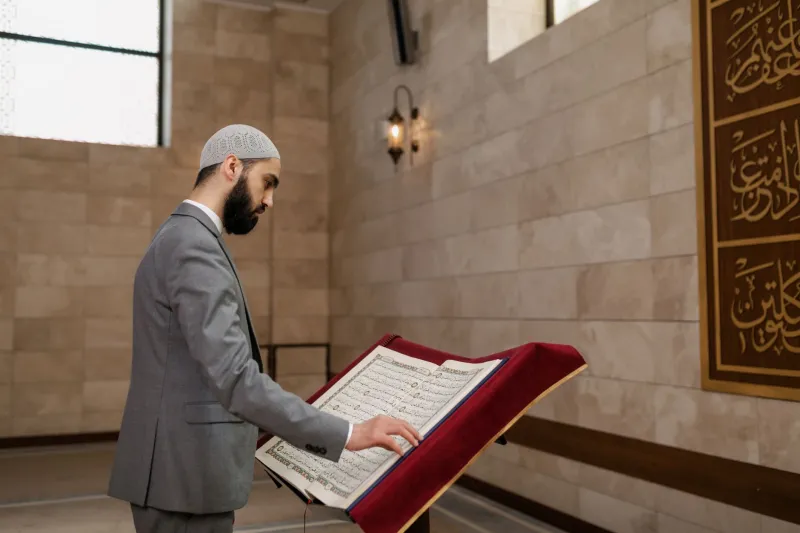
When the Body Breaks Down but the Quran Must Go On: A Hafiz's Guide to Memorizing Through Illness and Injury

Every serious memorizer eventually encounters it: the morning you wake up and the body simply refuses to cooperate. Perhaps it is a respiratory infection that leaves your voice raw and your concentration fractured. Perhaps it is a flare-up of a chronic condition, a post-surgical recovery, or an injury that has confined you to a couch for weeks. Whatever the cause, the experience is disorienting—not only physically, but spiritually. The Quran feels just out of reach, and the fear of losing ground can be more distressing than the illness itself.
Elite athletes understand this terrain well. A sprinter who tears a hamstring does not abandon conditioning; she shifts her training to upper-body strength and mental visualization. A swimmer recovering from shoulder surgery does not stop being a swimmer; he refines his technique, studies race footage, and maintains the habits of mind that define his identity as a competitor. The principle translates directly to hifz. When the body is compromised, the intelligent memorizer adapts rather than stops entirely.
Understanding What You Are Actually Losing—and What You Are Not
The first and most important reframe is distinguishing between active memorization and preservation. During a health setback, you may not be in a position to add new verses. That is acceptable. What is rarely acceptable—and rarely necessary—is allowing previously memorized material to erode through complete inactivity.
The brain's consolidation of memorized material does not pause simply because the body is unwell. In fact, rest periods following intensive learning have been shown in cognitive science research to support long-term retention. This means that a week spent quietly reviewing familiar juz', even at a reduced pace, is not lost time. It is, in many respects, time the material needed.
Distinguish between three categories of practice during any health setback:
- Active new memorization — adding verses or pages you have never learned before
- Active revision — reciting previously memorized material aloud to reinforce retention
- Passive engagement — listening to recitation, reading along silently, or mental rehearsal without vocalization
Illness rarely eliminates all three simultaneously. Understanding which remains available to you is the first step toward an adapted practice.
Modified Recitation Techniques for Physical Constraints
For those dealing with respiratory illness, laryngitis, or throat conditions, full-voiced recitation may be medically inadvisable. This is not a reason to stop engaging with the Quran—it is a reason to develop the quieter dimensions of your practice.
Silent lip recitation (known in Arabic as harakat ash-shafatayn) allows a memorizer to move through familiar passages without straining the vocal cords. While it lacks the full reinforcement of auditory feedback, it maintains the neural pathways associated with the sequence of words and verses.
Listening-based review is one of the most underutilized tools in any hafiz's repertoire. Selecting a reciter whose style you have internalized—whether Sheikh Mishary Rashid Alafasy, Sheikh Abdul Basit, or another—and following along mentally as they recite can reinforce memorization with remarkable effectiveness. Many American huffaz who commute or spend time in medical waiting rooms have found this approach particularly practical.
Written tracing is another option available to those whose physical limitations do not affect fine motor skills. Tracing the Arabic script of memorized verses—even without vocalizing—engages a different memory channel and can help maintain familiarity with the visual form of the text.
For those managing chronic pain conditions, the challenge is less about vocal capacity and more about concentration. Pain is cognitively expensive; it consumes attentional resources that memorization also requires. In these circumstances, shorter and more frequent sessions—five minutes of focused review every hour rather than a single forty-five-minute block—can be significantly more effective than attempting to push through extended practice against a backdrop of physical discomfort.
Protecting Momentum Without Ignoring the Body
One of the most common patterns among huffaz who experience health setbacks is what might be called the all-or-nothing collapse. Because their pre-illness routine is no longer feasible, they abandon the practice entirely, telling themselves they will resume when they feel better. Weeks pass. The gap widens. Returning becomes psychologically harder with each passing day.
Elite athletic trainers refer to something similar as detraining anxiety—the fear of losing fitness that, paradoxically, can make an injured athlete more reluctant to engage in any modified activity at all. The antidote is not willpower; it is structure.
Design a minimal viable practice for yourself before illness strikes, so that when it does, you are not making decisions while depleted. A minimal viable hifz practice during illness might look like this:
- Morning: Five minutes of silent lip recitation of a familiar juz' immediately after Fajr
- Midday: Fifteen minutes of listening-based review during a meal or rest period
- Evening: Three minutes of mental recitation before sleep, rehearsing a single page or passage
This structure preserves the habit architecture of daily Quran engagement even when the substance is necessarily reduced. Habit architecture matters enormously. The memorizer who maintains a daily touchpoint with the Quran during illness—however brief—returns to full practice far more smoothly than one who has broken the daily rhythm entirely.
The Spiritual Dimension of Hifz During Hardship
Islamic tradition offers profound resources for the memorizer who is suffering. The Prophet Muhammad ﷺ taught that every hardship a believer endures—including physical pain—can be a means of expiation and elevation in rank. Illness is not a spiritual interruption; it is, for the believer who responds with patience, a spiritual event in its own right.
For the hafiz, this reframe is not merely consoling—it is practically useful. Approaching a period of illness as a different kind of hifz season rather than as a failure of hifz changes everything. It transforms passive listening into an act of worship, silent review into a form of dhikr, and the struggle to maintain engagement despite pain into a demonstration of the very quality the Quran itself calls sabr.
Many scholars have noted that some of the most profound relationships with the Quran are forged not during periods of ease and productivity, but during seasons of difficulty when the memorizer clings to the text precisely because everything else has been stripped away.
Practical Guidance for American Muslims Managing Medical Realities
For Muslims in the United States, health setbacks carry additional logistical weight: medical appointments, insurance navigation, medication schedules, and the demands of work or school that rarely pause for illness. These pressures can crowd out hifz practice entirely if not deliberately managed.
A few practical recommendations:
Communicate with your teacher or accountability partner early. Most hifz instructors—whether at a local Islamic school, a weekend program, or an online academy—understand the realities of illness. Informing them allows them to adjust expectations and offer appropriate guidance rather than having you disappear from sessions without explanation.
Use medical waiting time intentionally. The average American spends a significant number of hours in waiting rooms during a health challenge. Downloading a Quran app with audio playback—Quran.com and similar platforms offer this—transforms otherwise passive time into review time.
Adjust your definition of progress temporarily. During illness, success is not adding a new page; success is not losing the pages you have. Celebrate retention. Document what you reviewed each day, however little. The record itself becomes a source of motivation.
Consult your physician about recitation. If you are recovering from throat, lung, or vocal cord conditions, ask your doctor specifically about the level of vocalization that is safe. Many physicians are unfamiliar with the demands of Quranic recitation; explaining the practice allows them to give guidance tailored to your actual needs.
Returning to Full Practice
The return from illness is its own phase and deserves deliberate attention. Attempting to resume at pre-illness intensity immediately often leads to frustration, self-criticism, and a second collapse. Instead, plan a graduated return: one week of pure revision before attempting any new memorization, followed by a second week of reduced new material, followed by a gradual return to full pace.
The hafiz who has navigated illness with patience, adapted their practice with wisdom, and returned with humility often discovers something unexpected: the material they preserved during difficulty has become more deeply embedded than they realized. The Quran, it seems, rewards those who refuse to let go—even when letting go would have been the easier path.