From Empty Hallways to Living Circles: A Step-by-Step Blueprint for Launching a Hifz Community at Your Masjid

Photo by Photo by Nick Fewings on Unsplash on Unsplash
Why Most Hifz Efforts at the Masjid Stall Before They Start
Across the United States, countless masajid have attempted to nurture hifz programs — and many have watched those efforts quietly fade. The announcement is made after Jumu'ah. A sign-up sheet appears on the bulletin board. A few enthusiastic families enroll their children. And then, without consistent structure or relational accountability, the momentum dissipates within a few months.
The problem is rarely a lack of desire. Muslim families in America deeply value the Quran, and the aspiration to raise a hafiz or hafiza is widespread. The gap lies almost always in infrastructure: the absence of clear roles, sustainable meeting rhythms, and the kind of human accountability that keeps students — and their families — committed through the inevitable difficult seasons.
Building a genuine hifz community at your masjid is possible. It requires deliberate planning, honest assessment of your congregation's capacity, and a willingness to start smaller and more durably than the ambition of the moment might suggest.
Step 1: Assess Your Congregation Before You Announce Anything
Before a single flyer is printed, take stock of what your masjid actually has to offer. Ask these foundational questions:
- Who is available to teach? Identify individuals in your congregation who hold an ijazah in Quranic recitation or have completed their own hifz under qualified instruction. Volunteer enthusiasm without qualification can inadvertently entrench incorrect habits in students.
- What physical space exists? A dedicated, consistent room — even a modest one — signals institutional seriousness and removes logistical friction from weekly gatherings.
- What is the realistic demographic? Are your potential students primarily children, teenagers, adults, or a mix? Each group requires a different pedagogical approach and scheduling structure.
- What is the level of family commitment? Hifz is a household endeavor. A student whose family is not prepared to support daily home review will struggle regardless of how excellent the masjid program is.
This assessment is not discouraging — it is protective. Programs built on accurate self-knowledge last. Programs built on optimistic overestimation collapse under the weight of unmet expectations.
Step 2: Build a Core Leadership Team — Not a Committee
Committees deliberate. Core teams act. For a hifz circle to launch and sustain itself, you need a small group of three to five individuals who share genuine ownership of the program's success.
This team should ideally include:
- A lead Quranic instructor with verifiable credentials and experience working with the relevant age group
- A parent coordinator who can serve as the primary point of contact for families and manage logistical communication
- A masjid liaison — a board member or administrator who can advocate for the program's needs within the institution
- A student mentor (ideally a young adult hafiz or hafiza from the community) who can provide peer-level inspiration and informal support to enrolled students
This team meets regularly — monthly at minimum — to evaluate student progress, address emerging challenges, and refine the program's structure. Their visible, consistent investment signals to families that this is a serious, lasting commitment.
Step 3: Design a Tiered Enrollment Structure
One of the most common structural errors in community hifz programs is treating all students identically regardless of their starting point. A child who has memorized five juz requires an entirely different environment than a beginner working on Surah Al-Fatiha for the first time.
Consider organizing your program into at least two tracks:
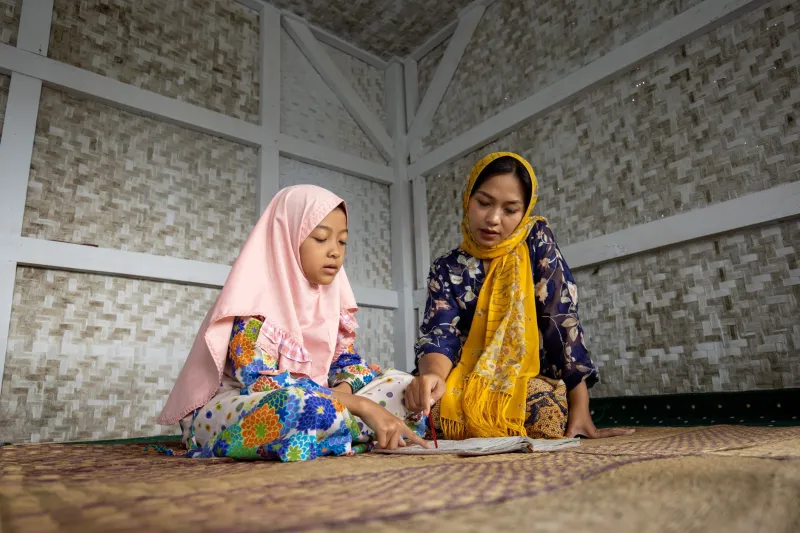
Foundation Track: For students new to memorization or with limited prior Quranic education. Focus here is on tajweed basics, consistent daily habit formation, and short surah memorization. Group sizes should be small — ideally no more than five to six students per instructor — to allow for individualized attention.
Advancement Track: For students who have already established a memorization base and are working through longer surahs or complete juz. This group benefits from structured peer accountability, regular testing (imtihan) sessions, and exposure to revision strategies for long-term retention.
Separating these groups prevents advanced students from feeling held back and ensures beginners are not overwhelmed by the pace of their peers.
Step 4: Establish a Mentorship Pairing System
Formal instruction is necessary but not sufficient. The relational dimension of hifz — the sense that someone who has walked this path is walking alongside you — is what sustains students through discouragement and fatigue.
Implement a structured mentorship pairing system in which each enrolled student is matched with a mentor from the congregation. Effective mentors share these characteristics:
- They have completed or are actively pursuing their own hifz
- They are at least five years older than their mentee
- They commit to a minimum of one brief check-in per week — a text, a phone call, or a conversation after salah
Mentors are not tutors. They are not responsible for teaching new material. Their role is encouragement, accountability, and the lived witness that completing hifz is achievable. This distinction must be communicated clearly during mentor orientation so that the relationship remains sustainable.
Step 5: Create Accountability Mechanisms That Actually Work
Accountability in hifz communities fails when it is purely social — when the only consequence of falling behind is mild embarrassment. Effective accountability combines warmth with structure.
Weekly recitation check-ins: Each student recites their weekly memorization goal to either their instructor or their mentor before the group session begins. This is not a test designed to shame — it is a ritual that reinforces the expectation of consistent daily effort.
Monthly progress reviews: Once per month, each student recites a larger portion — ideally the full content memorized since the program's start — in a brief, supportive setting. Families are invited to attend. Celebrating incremental milestones publicly builds motivation and strengthens the family's sense of investment.
A shared progress tracker: A simple, visible chart — posted in the masjid or shared through a private group app — allows students to see their own progress alongside their peers. Transparency, handled with care, motivates without shaming.
Step 6: Involve Families as Active Partners, Not Passive Observers
In the American context, where many Muslim families are navigating demanding work schedules, extracurricular commitments, and the particular pressures of raising children in a non-Muslim majority society, family engagement cannot be assumed — it must be cultivated.
Host a family orientation session before the program begins. Be honest about what hifz requires at home: daily review, a quiet recitation space, reduced screen time during study hours, and emotional encouragement during difficult weeks. Provide families with a simple home support guide — a one-page document outlining daily review expectations and strategies for supporting a child who is struggling.
Establish a parents' communication channel — a group chat or email list — through which the parent coordinator shares brief weekly updates, tips, and encouragement. Parents who feel informed and included are far more likely to sustain their household's commitment.
Step 7: Celebrate Consistently and Publicly
The completion of a juz, the mastery of a difficult surah, the return of a student after a period of absence — all of these deserve acknowledgment. Within the Muslim community, celebration of Quranic achievement carries both motivational and spiritual weight. It reminds the congregation that hifz is alive in their midst and inspires younger children who are watching from the edges.
Consider scheduling a semi-annual hifz showcase — a short program, perhaps after Maghrib on a Friday, in which students recite before the congregation. These moments are not performances; they are communal acts of honoring the Quran and those who carry it.
The Community You Build Is the Program
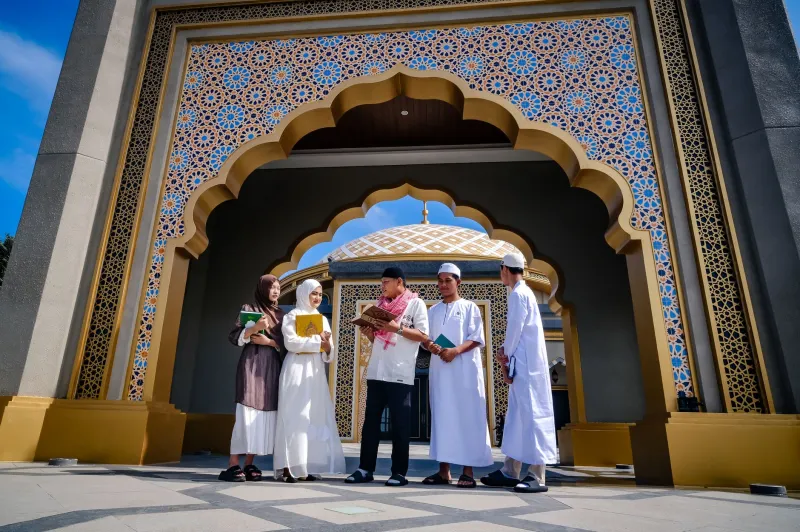
A hifz circle at your masjid is, at its core, a community of people who have decided together that the preservation of Allah's words matters enough to organize their lives around it. The logistics described above are tools — they serve a purpose only when animated by genuine love for the Quran and genuine care for the people pursuing it.
Start with what you have. Invite the people around you. Build structures that are honest about your capacity. And trust that a small, sincere circle — meeting consistently, holding one another accountable, celebrating one another's progress — is the seed from which something lasting can grow.