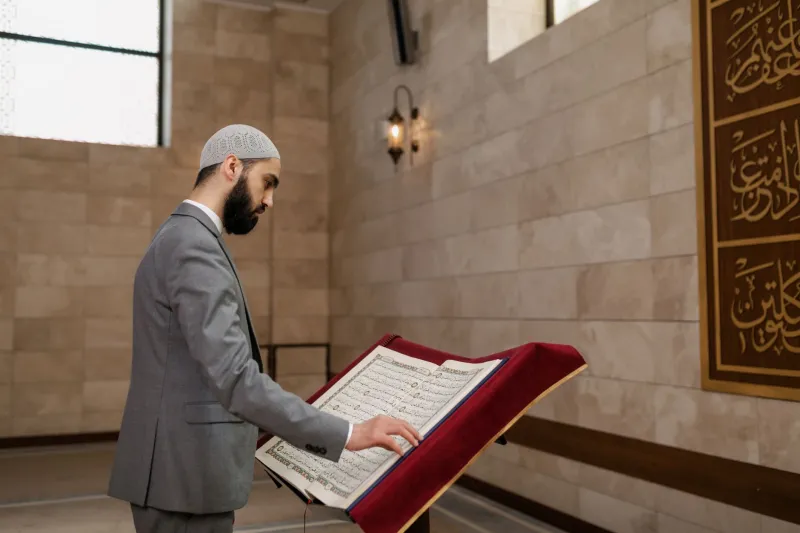
Rooted in Revelation: How Hifz Becomes a Compass for American Muslims Navigating Competing Worlds
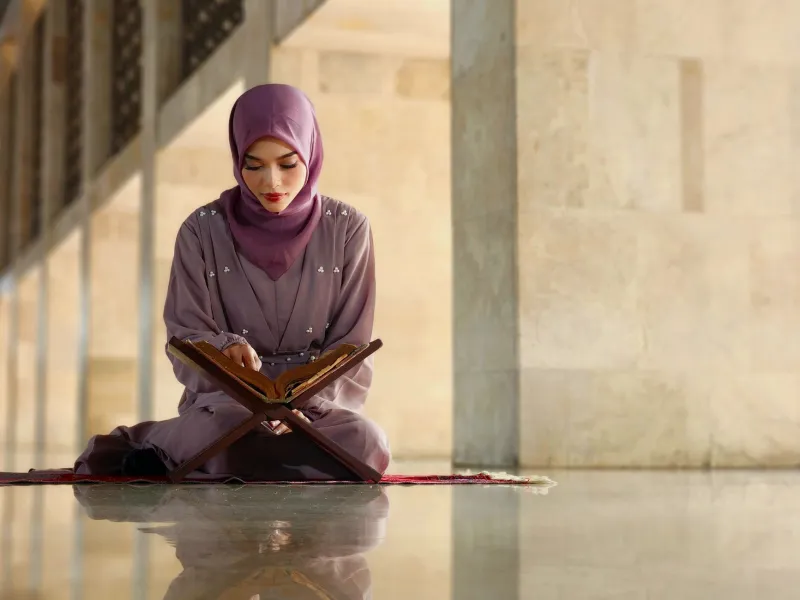
There is a particular kind of pressure that American Muslims know well. It is not always hostile. It is not always loud. It arrives in subtler forms—in the rhythm of a culture that measures worth by productivity, in social circles that assume certain values, in career ladders that demand total devotion, and in a consumer landscape that perpetually offers distraction as a substitute for meaning. For those who carry the Quran in memory, however, something remarkable tends to happen: the very act of holding those sacred verses becomes an anchor that holds firm even when the surrounding currents grow strong.
This is the quiet, often unspoken story of Huffaz in America. They are doctors, engineers, teachers, students, and entrepreneurs. They commute on the I-95, attend board meetings in Manhattan, and study for the MCAT in college libraries. And they carry, within them, the complete Word of Allah—a living inheritance that reshapes how they interpret every dimension of their daily experience.
The Weight of Two Worlds
Any Muslim who has grown up or built a life in the United States understands what it means to inhabit two frameworks simultaneously. American culture, for all its genuine strengths, is built on assumptions that do not always align with Islamic values: the primacy of individual ambition, the normalization of materialism, and a social calendar that can subtly crowd out spiritual practice. For young Muslims in particular, the tension between authentic religious identity and the desire to belong can become genuinely exhausting.
Huffaz describe this tension with striking clarity. A second-generation Pakistani-American medical student in Chicago recalled that the years of her Hifz training, completed at a weekend Islamic school while attending public high school, gave her something no college acceptance letter ever could: a stable interior life. "When everything around me was about competition and achievement," she explained, "I had verses that reminded me what I was actually here for. The Quran didn't let me forget."
This is not a romanticized abstraction. Research in psychology consistently demonstrates that individuals with strong spiritual identities show greater resilience against anxiety, social pressure, and identity confusion. For Huffaz, that spiritual identity is not merely conceptual—it is encoded in memory, accessible at any moment, and reinforced through daily revision.
Memorization as Moral Architecture
One of the least discussed dimensions of Hifz is the way the content of memorization actively shapes moral reasoning. When a Hafiz faces an ethical dilemma at work, or feels the pull of a lifestyle choice that conflicts with Islamic values, the Quran does not remain a distant reference. It surfaces. Specific ayaat, absorbed through thousands of repetitions, become the interior voice that speaks before any external counsel is sought.
A young attorney in Houston described how Surah Al-Baqarah's extensive passages on financial ethics informed his decision to decline a lucrative but ethically ambiguous contract early in his career. "I didn't sit down and look it up," he said. "The verses were already there. They had been there since I was twelve years old. The decision wasn't even that difficult once I heard them in my head."
This is the architecture that Hifz builds over years of patient, consistent work. It is not a rulebook consulted from the outside. It is a framework constructed from within—one that operates continuously, often below the level of conscious deliberation.
When Culture Pulls Hardest
The moments that test American Huffaz most acutely are rarely dramatic. They are ordinary. They are the Friday afternoon when work commitments threaten to swallow Jumu'ah. They are the Ramadan that arrives during finals season. They are the social events where the ambient culture assumes participation in things Islam prohibits, and where refusal requires both clarity and courage.
Huffaz consistently report that their memorization practice provides a kind of spiritual ballast during these moments—not by removing the difficulty, but by ensuring that their sense of self remains intact regardless of external pressure. When you know who you are at the level of your deepest memory, cultural pressure has less traction.
A college junior at a large state university in Ohio described the experience of maintaining his Hifz review during his freshman year as one of the most formative decisions of his life. "My roommates thought it was strange at first. But having that daily practice—sitting with the Quran every morning before anything else—meant that I walked into every situation that day knowing where I stood. I wasn't confused about who I was."
Practical Anchoring: Strategies That Work
For Huffaz navigating American life, maintaining the Quran in memory is both a spiritual practice and a practical discipline. Several strategies have emerged as particularly effective for those managing the specific demands of the American context.
Consistent morning revision, even when brief, establishes the Quran as the first frame of the day before the noise of professional and social life begins. Many Huffaz in demanding careers describe fifteen to twenty minutes of Fajr-time revision as non-negotiable—a boundary that protects everything else.
Intentional community, even in small form, provides accountability that solitary practice cannot sustain indefinitely. Whether it is a weekly halaqah at a local masjid, a virtual revision partnership with another Hafiz, or a family tradition of evening recitation, structured communal engagement reinforces both memorization and identity.
Thematic reflection, the practice of pausing with the meaning of what one is reciting rather than treating revision purely as a retention exercise, transforms Hifz from a memory discipline into an ongoing conversation with Allah. Huffaz who engage with tafsir and who regularly reflect on the relevance of specific passages to their current circumstances report a far stronger sense of the Quran's living presence in their daily decisions.
Transparent identity, the choice to be open about one's faith and Hifz practice in professional and academic settings rather than concealing it, is consistently cited by experienced Huffaz as a source of confidence rather than vulnerability. When colleagues and classmates understand that Islamic practice is central to who you are, the social pressure to assimilate quietly tends to diminish.
The Quran Does Not Compete
Perhaps the most important insight that long-term Huffaz offer is this: the Quran does not compete with American life. It does not demand that its bearers retreat from professional excellence, civic participation, or meaningful engagement with the broader culture. What it does demand is priority—a willingness to allow its values to sit above rather than alongside the values the surrounding culture proposes.
For Huffaz, that priority is not an abstract commitment. It is encoded in memory. It is rehearsed daily. It is present in the car during the morning commute, in the quiet before a difficult meeting, and in the last moments before sleep. In a culture that offers endless alternatives to stillness and rootedness, the Hafiz carries something irreplaceable: a home that cannot be taken away, a guidance that does not go offline, and a relationship with the Word of Allah that deepens with every year of faithful stewardship.
In a nation of competing narratives, that is not a small thing. It is, for those who carry it, everything.